


 Close Menu
 World
 Biography
 Health
 Education
 Business
 Lifestyle
 Sports
 Technology
 Animals
 History
 Food
 Religious
 Startups
 Movies
 Politics
 Fashion
 Covid
 Diet
 Fitness
 Marketing
 Travel
 Science
 Reviews
 Social media
 Stories
 Facts
 Art
 Entertainment
Adam John

Business
Padel Court Construction: A Complete Guide to Design, Installation, Materials and Costs
 Adam John
Padel is one of the fastest-growing racket sports worldwide, creating increasing demand for high-quality padel courts at sports clubs, schools, leisure centres, hotels and private facilities. As more people discover the sport, investing in professional padel court construction has become an attractive opportunity for property owners, sports facility operators and developers. However, building a durable, safe and enjoyable padel court requires careful planning, suitable materials, specialist installation and attention to international playing standards.
Whether you are developing a single court or a multi-court sports complex, understanding the construction process can help you make informed decisions and achieve a facility that delivers long-term value.
What Is Padel Court Construction?
Padel court construction involves designing and building a specialised enclosed playing area for padel, a racket sport that combines elements of tennis and squash. A standard padel court measures 20 metres long and 10 metres wide, with a net dividing the playing area into two equal halves.
Unlike traditional tennis courts, padel courts feature enclosed walls made from glass and metal mesh. These structures allow players to use wall rebounds as part of the game, making the design and construction of the enclosure particularly important.
A professionally constructed court includes several essential elements:
- A properly prepared and level foundation.
- A suitable artificial turf playing surface.
- Tempered glass panels and metal mesh fencing.
- A strong structural steel framework.
- A regulation-compliant net and supporting posts.
- Suitable lighting for evening play.
- Safe and accessible entrance arrangements.
Every component contributes to the court's performance, safety and durability.
Planning and Designing a Padel Court
Successful padel court construction starts with detailed planning. Before installation begins, the construction team should assess the available site, intended usage, ground conditions and project requirements.
Site Selection and Space Requirements
A standard padel court requires a playing area of 200 square metres. However, additional space is necessary for access, maintenance, spectator areas and safe movement around the enclosure.
Developers should consider:
- Available land and surrounding buildings.
- Ground stability and drainage conditions.
- Access for construction equipment.
- Player entrances and emergency access.
- Lighting requirements and nearby residential properties.
- Future opportunities for additional courts.
For commercial facilities, planning multiple courts together can improve visitor flow, operational efficiency and revenue opportunities.
Choosing the Right Court Design
Padel courts are available in different configurations, including panoramic, classic and super panoramic designs. Panoramic courts typically feature glass arrangements that provide improved visibility for spectators and filming.
The right design depends on the intended application, available budget and overall appearance of the facility.
The Padel Court Construction Process
Professional installation follows several stages to ensure the finished court meets technical requirements and provides a consistent playing experience.
1. Ground Preparation and Foundation Work
The first stage involves preparing the construction site. Contractors clear vegetation, remove unsuitable materials and establish the required levels.
A stable foundation is essential because uneven ground can affect the playing surface, structural alignment and drainage performance.
Depending on the site conditions, construction may involve reinforced concrete slabs or other engineered foundation systems. The foundation must be designed to support the court structure, glass panels, fencing and expected environmental loads.
Proper drainage should also be incorporated to prevent water accumulation and reduce maintenance problems.
2. Installing the Structural Framework
Once the foundation is ready, the steel framework is installed. This framework supports the glass panels, metal mesh and other enclosure components.
The structure must be engineered for strength, stability and resistance to environmental conditions. Corrosion-resistant coatings and suitable protective finishes can help extend its service life, particularly in exposed outdoor environments.
Accurate positioning is important to ensure that the enclosure maintains the correct dimensions.
3. Glass Panels and Metal Mesh Installation
Glass and mesh are defining features of a padel court. Tempered safety glass is commonly used for the rear and selected side walls, while metal mesh completes the remaining enclosure sections.
The glass panels must be manufactured and installed to meet applicable safety and structural requirements.
Professional installation helps ensure:
- Secure panel connections.
- Correct alignment and positioning.
- Suitable impact resistance.
- Consistent wall rebound performance.
- Safe edges and connection points.
The metal mesh should also be appropriately tensioned and securely attached to the supporting structure.
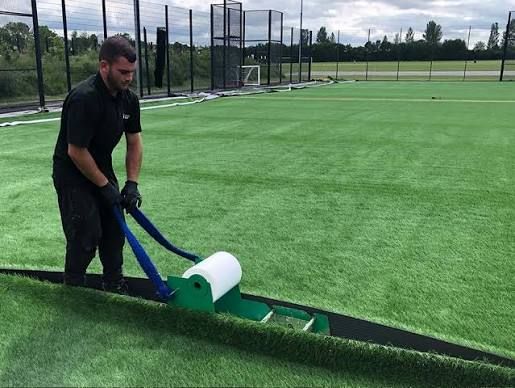
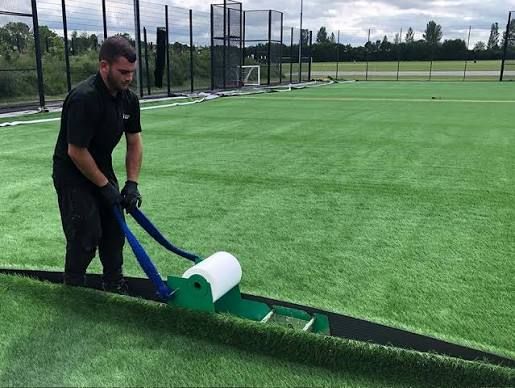
4. Artificial Turf Installation
The playing surface has a significant influence on player comfort, ball behaviour and overall court performance.
Artificial turf specifically designed for padel is commonly installed over a properly prepared base. Different turf systems offer different playing characteristics, including variations in ball speed, traction and surface feel.
The installation process generally includes preparing the surface, laying the turf, securing the joints and applying the recommended infill material where required.
A high-quality surface should provide consistent ball bounce, reliable grip and suitable resistance to regular use.
5. Lighting and Electrical Installation
Lighting is particularly important for commercial padel facilities that operate during evenings.
LED sports lighting is a popular option because it provides efficient illumination and can reduce ongoing energy consumption. Lighting fixtures should be positioned to minimise glare and shadows while maintaining visibility across the entire playing area.
Electrical installations should comply with relevant safety regulations and be completed by qualified professionals.
6. Netting, Access and Final Inspection
The final installation stage includes fitting the net, checking the entrances and completing other finishing details.
Contractors should inspect the playing dimensions, structural connections, glass panels, turf surface, lighting and drainage before opening the facility.
A final safety inspection helps identify installation issues and ensures the court is ready for use.
Choosing the Right Materials for Padel Courts
Material selection directly affects construction quality, maintenance requirements and long-term operating costs.
Important materials include:
- Tempered glass: Provides visibility, durability and consistent ball rebounds.
- Galvanised steel: Supports the enclosure and offers structural strength.
- Artificial turf: Provides a suitable playing surface with controlled traction and ball response.
- LED lighting: Supports energy-efficient evening operation.
- Protective coatings: Help minimise corrosion and environmental damage.
Choosing materials based on quality, compatibility and manufacturer specifications can help prevent premature repairs and unnecessary maintenance expenses.
How Much Does Padel Court Construction Cost?
The cost of building a padel court depends on several factors, so there is no single price suitable for every project.
Key cost considerations include:
- Court design: Panoramic and premium configurations may require more specialised materials.
- Ground preparation: Excavation, levelling and foundation requirements vary between sites.
- Materials: Glass quality, steel specifications and artificial turf influence the overall budget.
- Lighting: Outdoor LED systems and electrical infrastructure add to installation costs.
- Location: Transportation, labour availability and local construction regulations affect pricing.
- Additional facilities: Changing rooms, seating, landscaping and access improvements increase project expenditure.
The best approach is to obtain a detailed quotation covering design, groundwork, materials, installation, lighting and any additional requirements.
Benefits of Professional Padel Court Installation
Working with experienced construction specialists can make a significant difference to the quality and performance of a finished facility.
Professional installation offers several advantages:
- Improved player safety: Correctly installed structures and surfaces reduce avoidable hazards.
- Consistent playing conditions: Proper dimensions and quality turf support reliable gameplay.
- Long-term durability: Suitable materials help withstand frequent use and outdoor exposure.
- Reduced maintenance: Correct drainage and installation minimise potential problems.
- Better commercial potential: Attractive, well-designed courts can help sports facilities attract more players.
For clubs, schools and commercial operators, professional construction is an investment in the overall playing experience.
Maintaining Your Padel Court
Regular maintenance protects your investment and helps keep the court safe and enjoyable.
Recommended maintenance activities include cleaning the artificial turf, redistributing infill where necessary, inspecting glass panels, checking structural fixings and maintaining the drainage system.
Lighting should also be inspected periodically to identify damaged fixtures or electrical problems.
The maintenance schedule should follow the recommendations of the turf, glass and court structure manufacturers.
Why Choose Experienced Padel Court Construction Specialists?
Building a professional padel court requires more than installing glass panels and artificial grass. It involves engineering, surface preparation, structural installation and careful attention to playing requirements.
An experienced contractor can manage the project from initial consultation and site assessment through to construction and final inspection. This coordinated approach helps maintain quality, minimise installation issues and ensure that the finished facility meets the project's objectives.
Before selecting a contractor, review previous projects, material specifications, installation experience, warranties and aftercare services.
Frequently Asked Questions (FAQs)
1. What is the standard size of a padel court?
A standard doubles padel court measures 20 metres long and 10 metres wide, providing a total playing area of 200 square metres.
2. How long does padel court construction take?
Construction time depends on site preparation, foundation requirements, weather, material availability and installation complexity. A straightforward project may take several weeks, while more complex developments can take longer.
3. What surface is best for a padel court?
Specialist artificial turf is commonly used because it provides suitable traction, player comfort and consistent ball behaviour.
4. Can padel courts be installed outdoors?
Yes. Outdoor padel courts are widely installed, provided their foundations, drainage, structural framework and materials are suitable for local environmental conditions.
5. How many square metres are required for a padel court?
The playing area requires 200 square metres. Additional surrounding space should be allowed for access, maintenance and spectator requirements.
Conclusion
Padel court construction is an excellent opportunity for sports clubs, schools, developers and commercial facility owners looking to meet the growing demand for modern racket sports. From site preparation and foundation work to glass installation, artificial turf and lighting, every construction stage contributes to the finished court's quality and performance.
By choosing suitable materials, following recognised technical standards and working with experienced installation specialists, you can develop a durable, attractive and functional padel facility. Careful planning and professional construction will help create a positive playing experience while supporting the long-term success of your sports investment.
Source:
Click for the: Full Story
You might like







You Might Like this